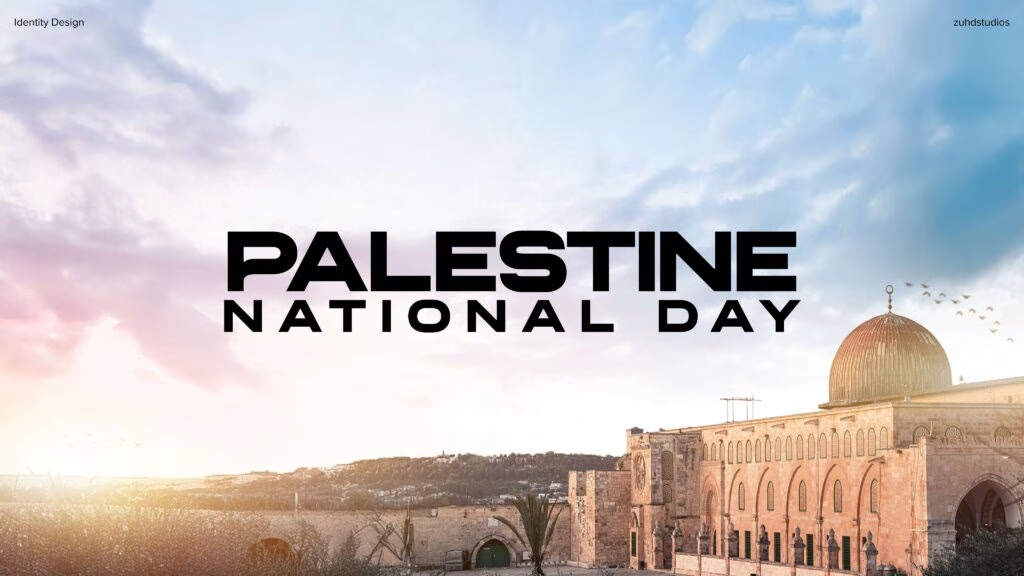
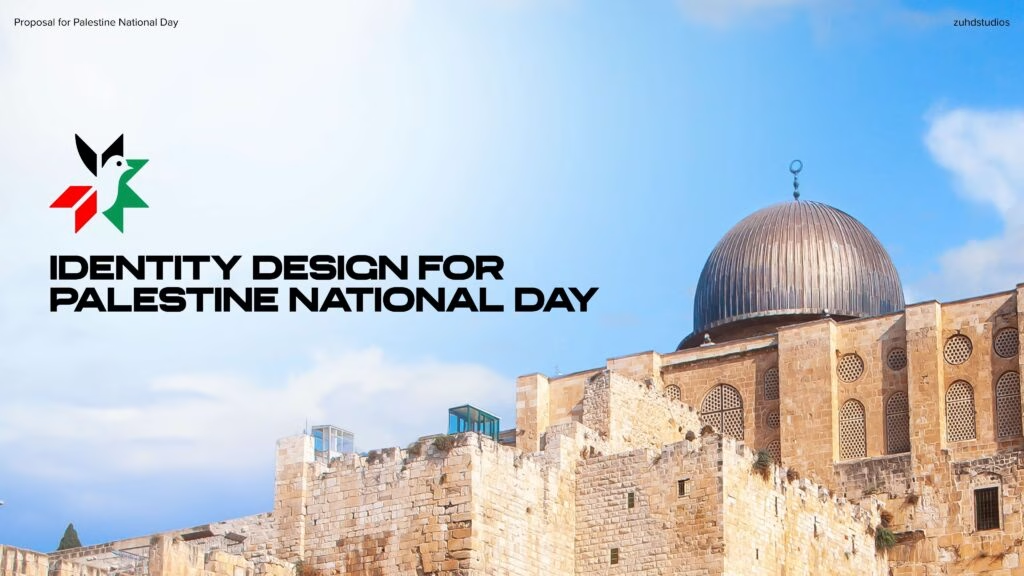
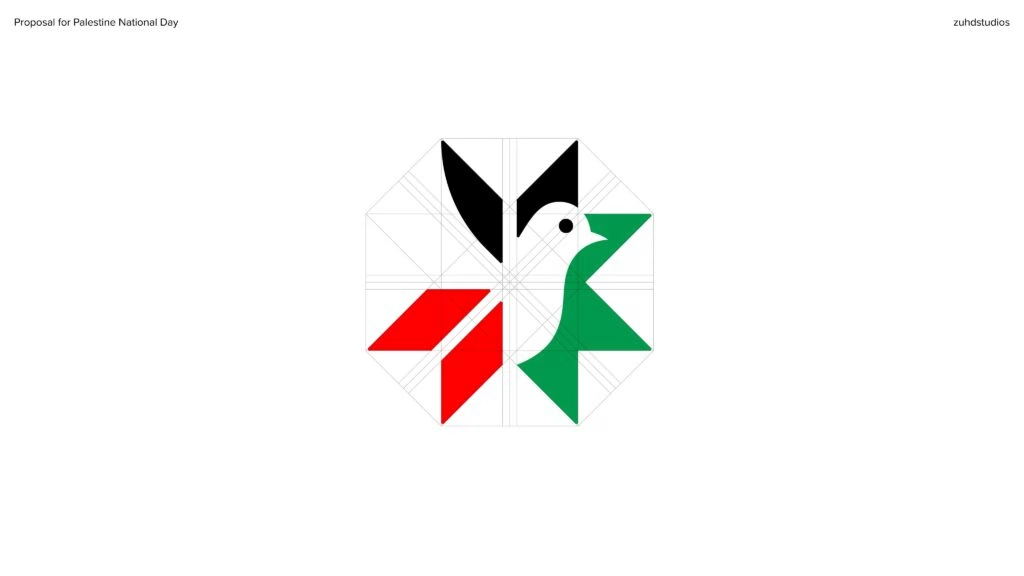
Working on the Palestine National Day identity has been both an honour and a responsibility approached with care. This proposal explores how traditional Palestinian textile patterns can inform contemporary design thinking — translating cultural essence into modern expression, not copying it.
The Problem:
Cultural Erasure
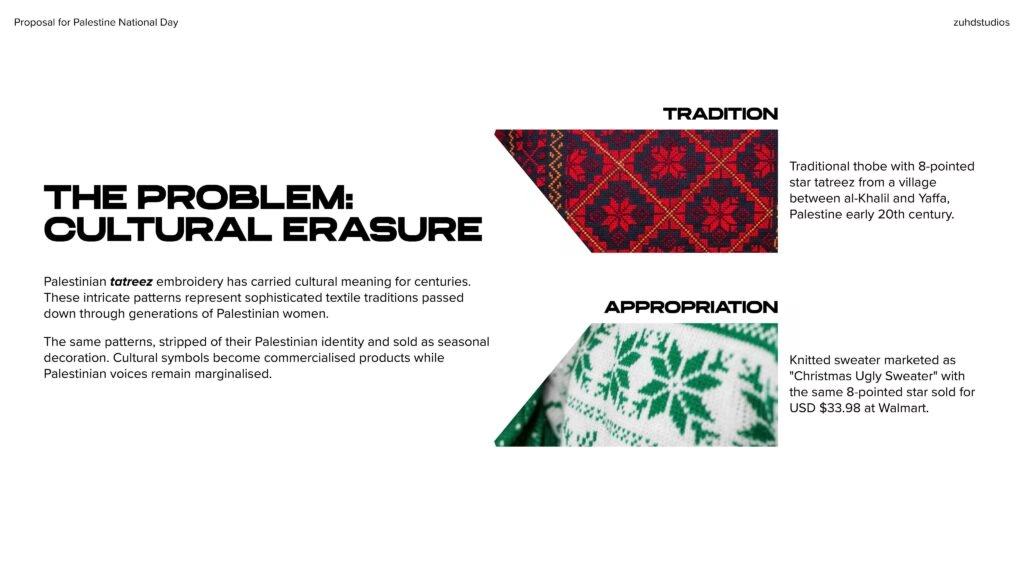
Palestinian tatreez embroidery has carried cultural meaning for centuries. These intricate patterns represent sophisticated textile traditions passed down through generations of Palestinian women.
The same patterns, stripped of their Palestinian identity, are sold as seasonal decoration. Cultural symbols become commercialised products while Palestinian voices remain marginalised — the 8-pointed star renamed "snowflake" and sold at Walmart for USD $33.98.
3,000 Years of Pattern
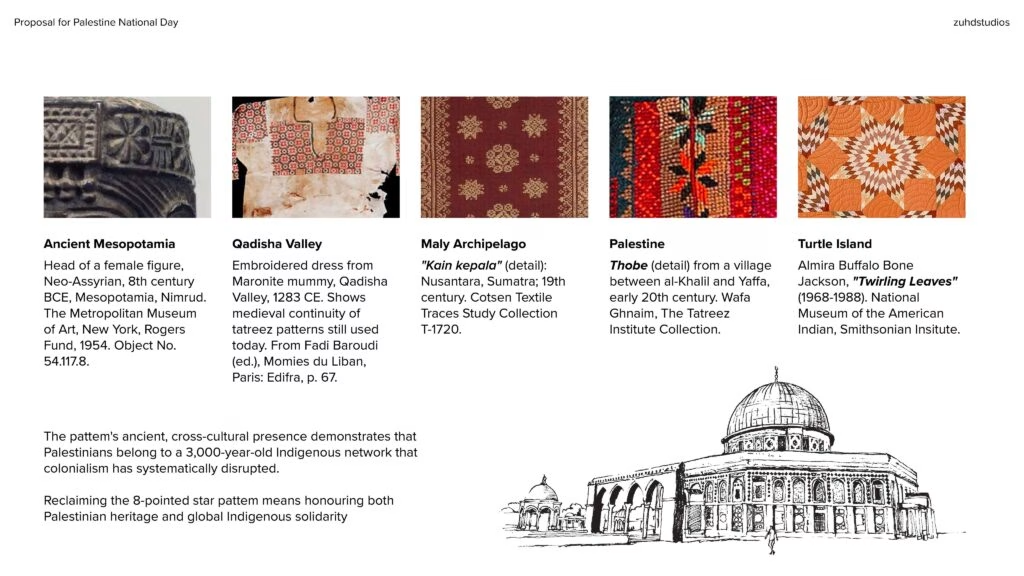
This 8-pointed motif spans over 3,000 years. Ancient Mesopotamian artefacts from the 14th–8th centuries BCE show the pattern on royal headdresses. Medieval evidence from 1283 CE confirms its continuous practice.
The same motif appears across Indigenous cultures globally: Palestinian tatreez, Lakota 'Morning Star' quilts representing the four stages of life, and Malay Songket 'lotus flowers' symbolising levels of existence.
Palestinians belong to a 3,000-year-old Indigenous network that colonialism has systematically disrupted. Reclaiming the 8-pointed star pattern means honouring both Palestinian heritage and global Indigenous solidarity.
The Pattern Across History
Ancient Mesopotamia
Neo-Assyrian head of a female figure. Metropolitan Museum of Art, New York. Object No. 54.117.8.
Qadisha Valley
Kain kepala (detail): Nusantara, Sumatra. Cotsen Textile Traces Study Collection T-1720.
Palestine
Thobe from a village between al-Khalil and Yaffa. Wafa Ghnaim, The Tatreez Institute.
Turtle Island
Almira Buffalo Bone Jackson, "Twirling Leaves." National Museum of the American Indian, Smithsonian.
Cultural
Sovereignty
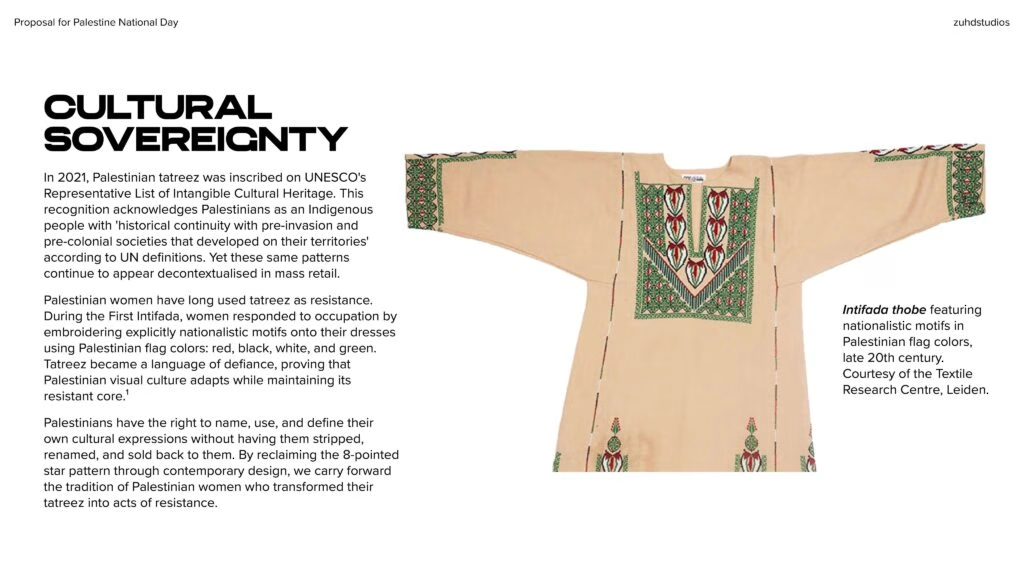
In 2021, Palestinian tatreez was inscribed on UNESCO's Representative List of Intangible Cultural Heritage — acknowledging Palestinians as an Indigenous people with historical continuity with pre-invasion and pre-colonial societies.
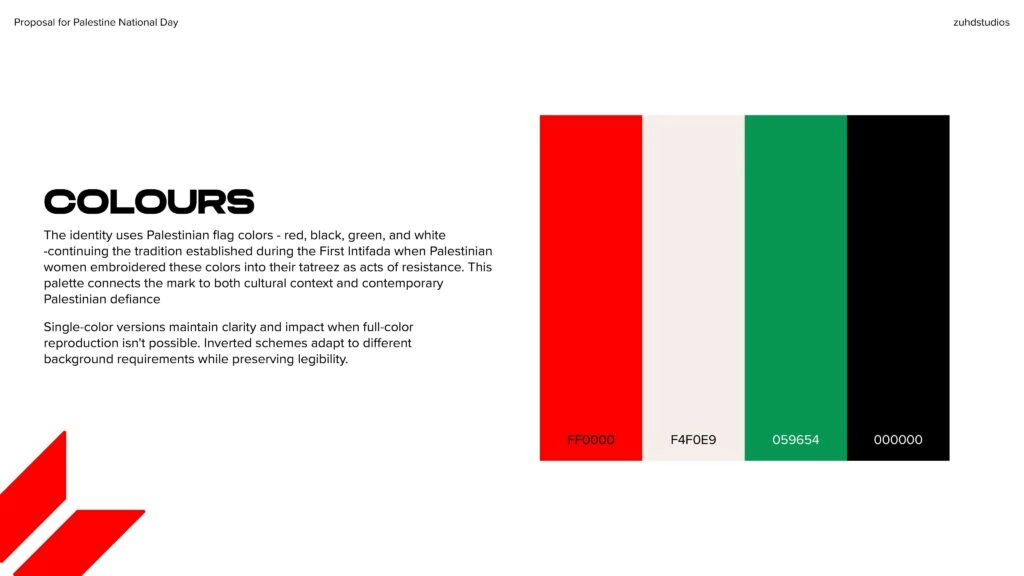
During the First Intifada, Palestinian women responded to occupation by embroidering explicitly nationalistic motifs onto their dresses using Palestinian flag colours: red, black, white, and green. Tatreez became a language of defiance.
Palestinians have the right to name, use, and define their own cultural expressions without having them stripped, renamed, and sold back to them.
Construction
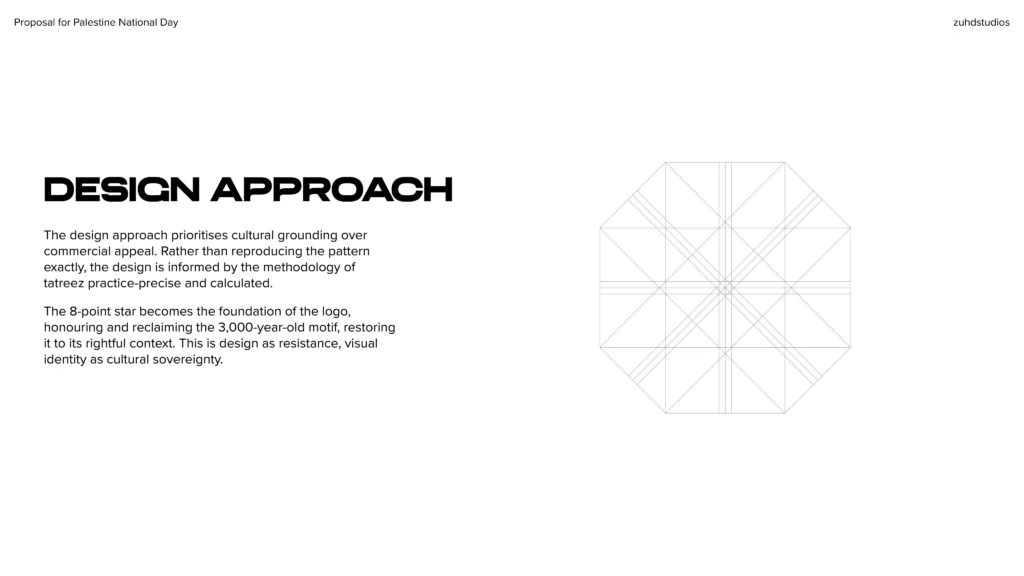
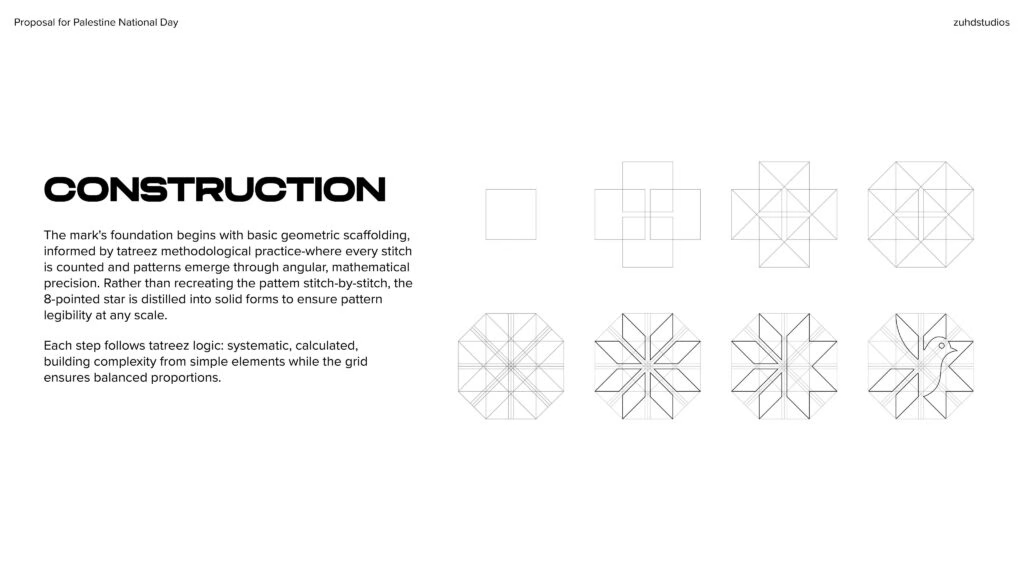
The mark's foundation begins with basic geometric scaffolding, informed by tatreez methodological practice — where every stitch is counted and patterns emerge through angular, mathematical precision.
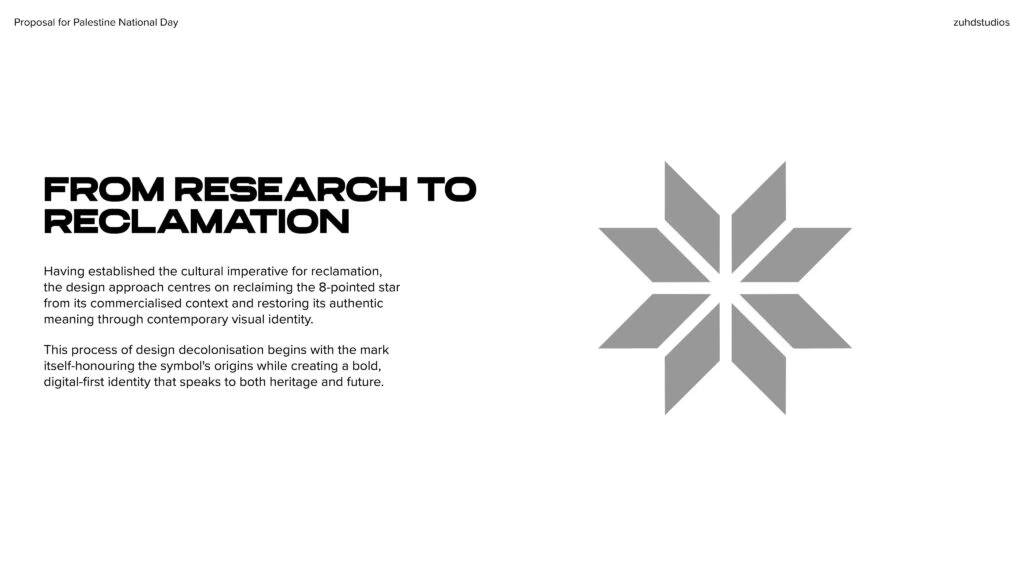
Rather than recreating the pattern stitch-by-stitch, the 8-pointed star is distilled into solid forms to ensure legibility at any scale. Each step follows tatreez logic: systematic, calculated, building complexity from simple elements.
From Research to Reclamation
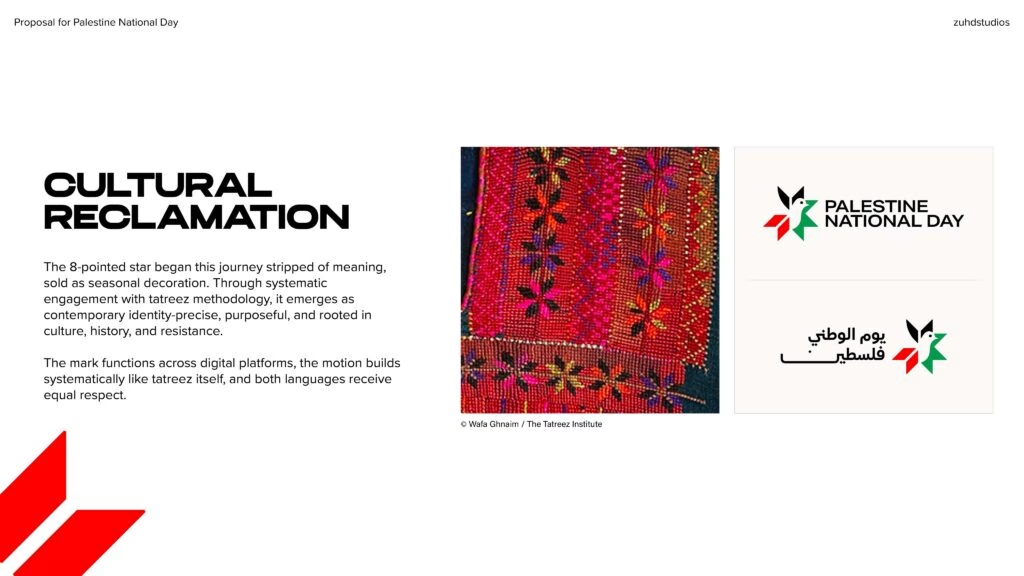
The design approach centres on reclaiming the 8-pointed star from its commercialised context — restoring its authentic meaning through contemporary visual identity. This is design decolonisation.
The Final
Logo
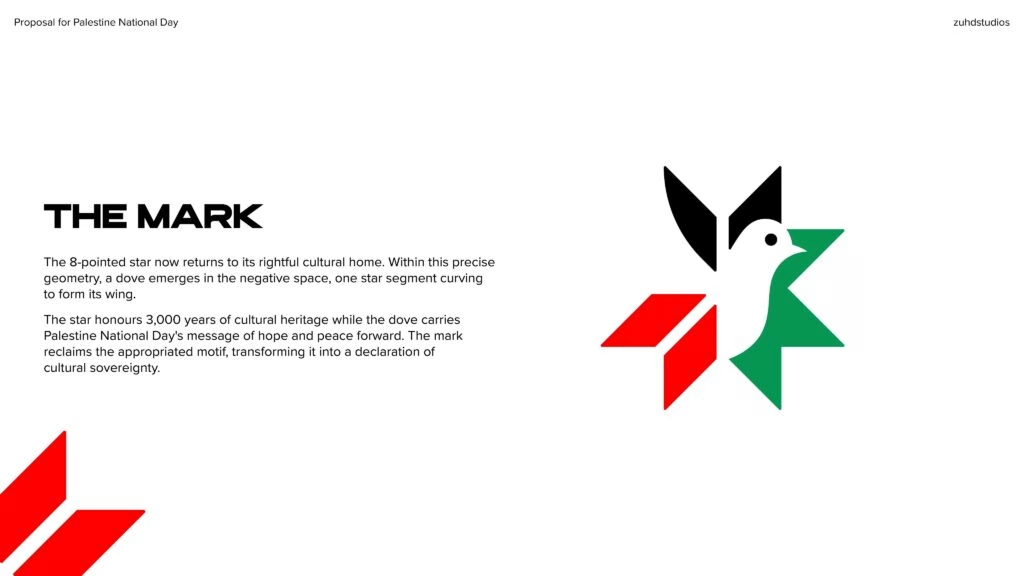
The 8-pointed star now returns to its rightful cultural home. Within this precise geometry, a dove emerges in the negative space — one star segment curving to form its wing.
The star honours 3,000 years of cultural heritage while the dove carries Palestine National Day's message of hope and peace forward. The mark reclaims the appropriated motif, transforming it into a declaration of cultural sovereignty.
Bilingual Identity
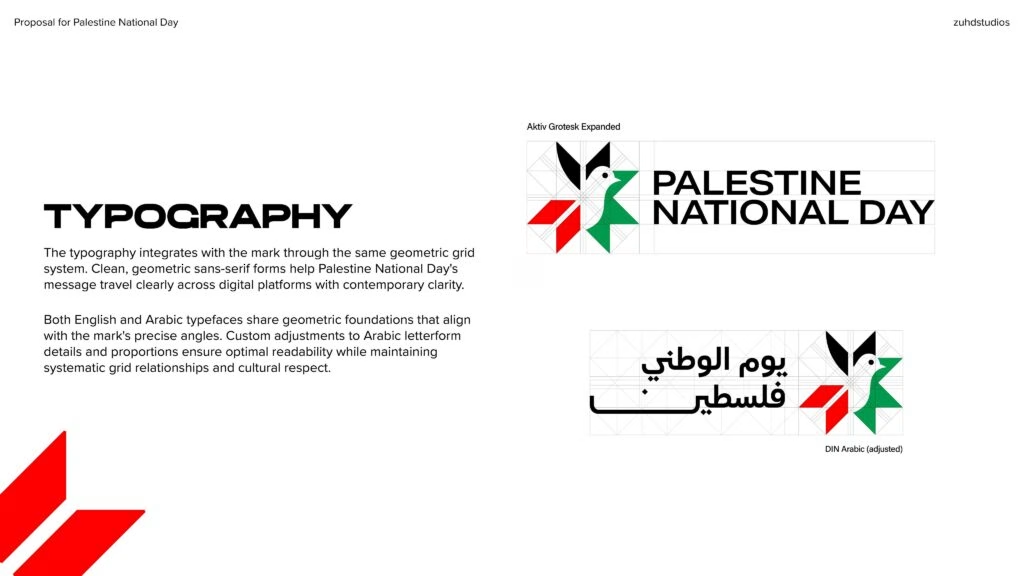
Both English and Arabic versions receive equal visual weight. The typeface — Aktiv Grotesk Expanded with DIN Arabic — shares the same geometric grid as the mark itself.
Typography
The typography integrates with the mark through the same geometric grid system. Clean, geometric sans-serif forms help Palestine National Day's message travel clearly across digital platforms.
Both English and Arabic typefaces share geometric foundations that align with the mark's precise angles. Custom adjustments to Arabic letterform details and proportions ensure optimal readability while maintaining systematic grid relationships and cultural respect.
Equal Respect for Both Languages
Neither English nor Arabic is subordinate. The identity works equally in both directions — speaking to diverse Palestinian communities across the world.
Colours
The typography integrates with the mark through the same geometric grid system. Clean, geometric sans-serif forms help Palestine National Day's message travel clearly across digital platforms.
Both English and Arabic typefaces share geometric foundations that align with the mark's precise angles. Custom adjustments to Arabic letterform details and proportions ensure optimal readability while maintaining systematic grid relationships and cultural respect.
Equal Respect for Both Languages
Neither English nor Arabic is subordinate. The identity works equally in both directions — speaking to diverse Palestinian communities across the world.
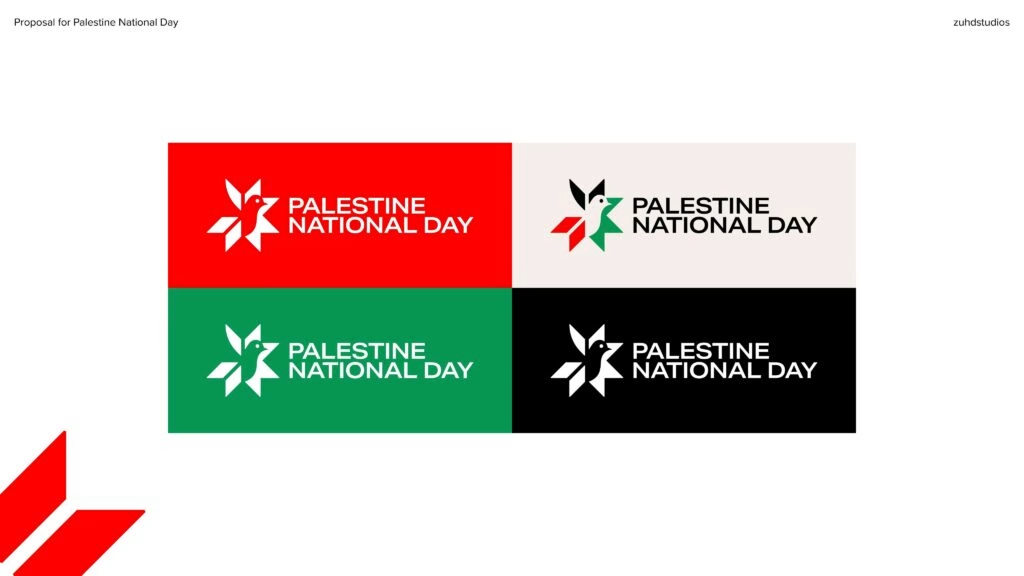
Logo on Every
Background
The mark adapts across all four brand colours while maintaining legibility and visual integrity. Each version carries equal cultural weight — no colour is dominant, all serve the identity equally.
Inverted single-colour schemes ensure the identity performs on any surface: digital displays, print materials, social media, merchandise, and event signage.
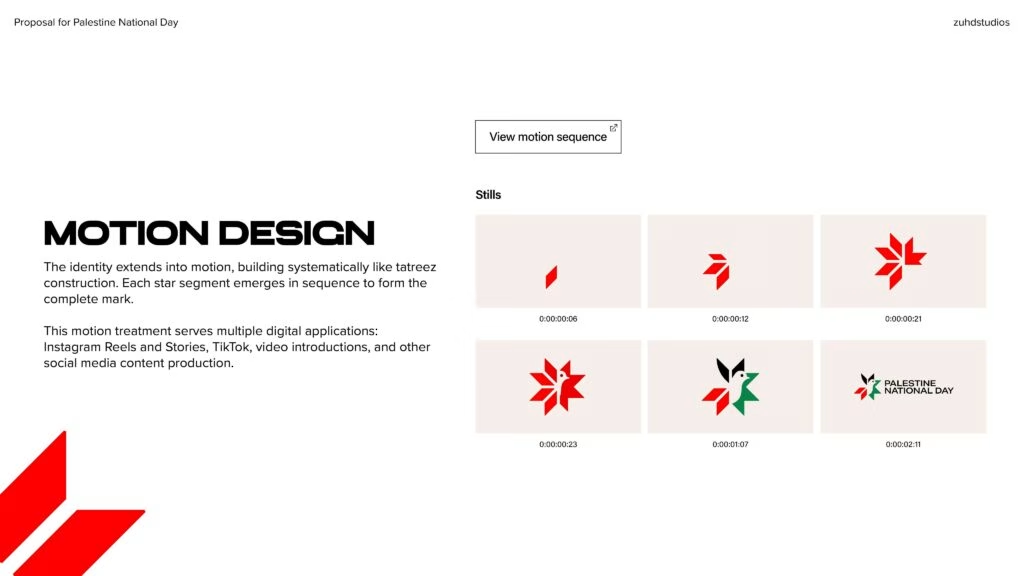
Motion Design
The identity extends into motion, building systematically like tatreez construction. Each star segment emerges in sequence to form the complete mark — mirroring the stitch-by-stitch construction of traditional embroidery.
This motion treatment serves multiple digital applications: Instagram Reels and Stories, TikTok, video introductions, and other social media content production. The animation honours the same methodical logic as tatreez practice itself.
Cultural
Reclamation
The mark functions across digital platforms, the motion builds systematically like tatreez itself, and both languages receive equal respect.
"From Tradition to Contemporary Expression"